
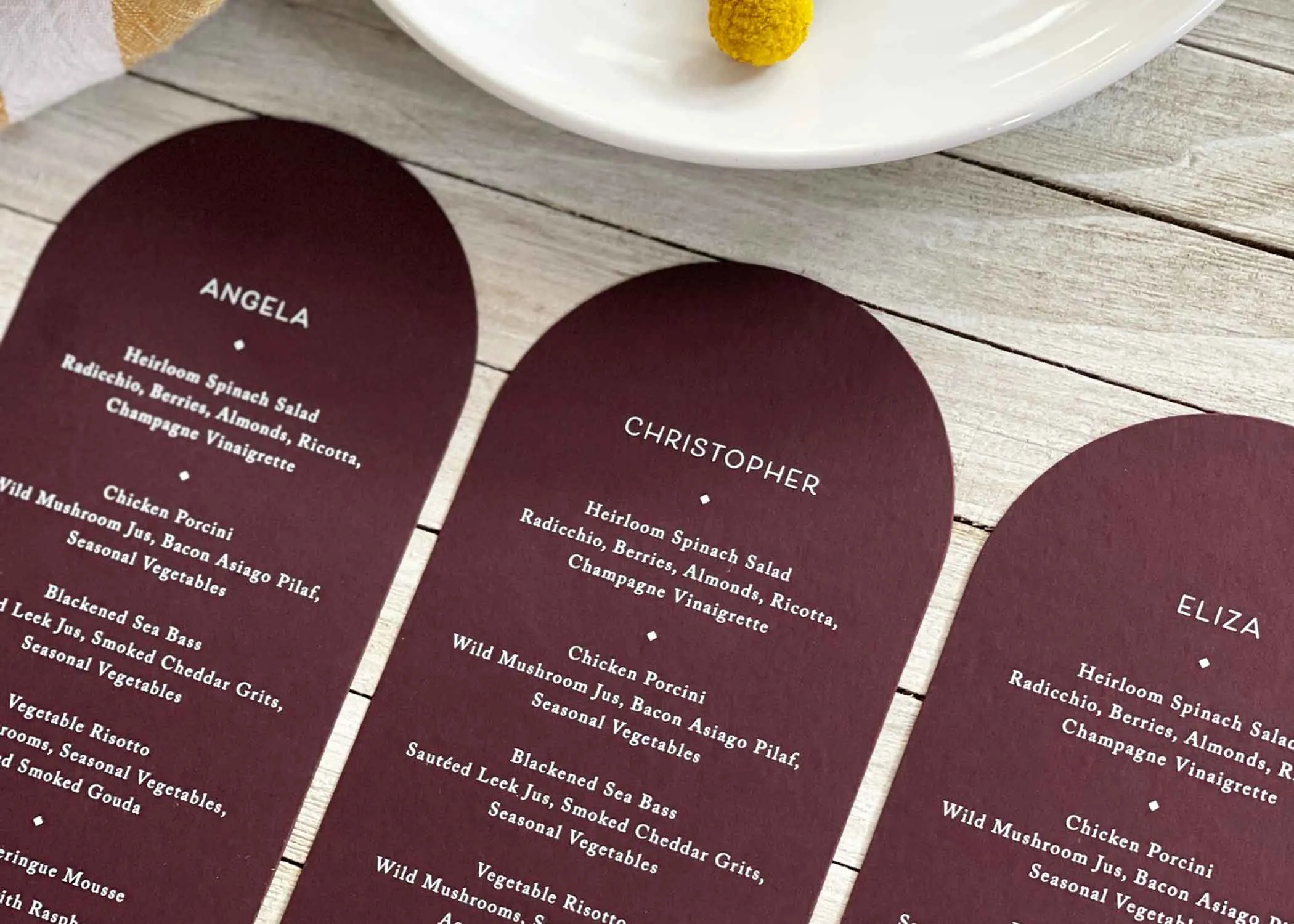
We got into the printing business because of a fascination with the letterpress process — vintage presses, ink mixed by hand, centuries-old methods. Some designs, however, call for modern solutions.
White ink printing is one of the most popular trends in luxury stationery. It poses a challenge for the letterpress printer: letterpress inks are transparent. While darker inks on light paper print beautifully, white ink on dark paper looks washed out because of how the ink sits on soft, uncoated stock. For true, opaque white on colored papers, we use digital printing.
Can you print white ink with letterpress?
Not effectively. Letterpress inks are transparent, so white ink on dark paper never achieves a crisp, bright result. White foil stamping is sometimes a workaround, but foil has limitations with very fine or small text.
Our modern digital printers are capable of printing opaque white ink on textured papers and envelopes — the same premium uncoated stocks used in letterpress printing. There is no compromise in quality.
What papers work best for white ink printing?
Keaykolour, Colorplan, and Gmund are excellent choices — each line comes in a wide range of vibrant colors on which white ink pops.
These are the same papers used throughout our letterpress work, so a white ink printed piece can coordinate seamlessly with letterpress-printed components in the same suite.
White ink on colored envelopes
The contrast of white ink against a deep jewel-toned or soft romantic envelope is one of the most striking combinations in modern wedding stationery.
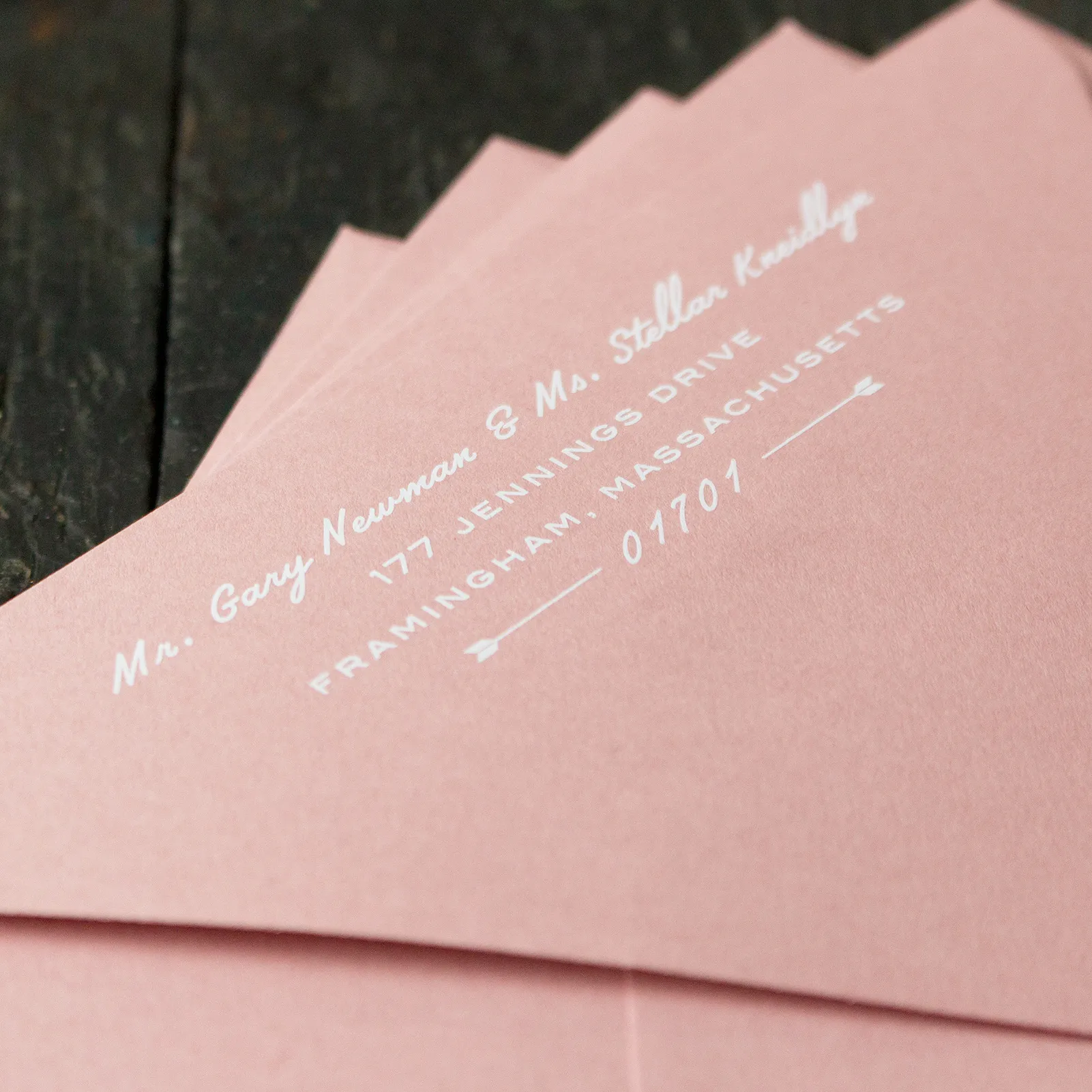
Colored envelopes — deep jewel tones like amethyst and emerald, soft romantic tones like blush and camel — are as popular as the traditional white envelope for custom invitation suites. White ink printing is the perfect way to make return addresses and guest addressing pop against these colors.
We print variable guest addresses digitally, so each envelope receives the correct name and address from your list. The process is the same as digital calligraphy addressing, and the results are clean, accurate, and beautiful.
When should I choose white ink over white foil stamping?
White foil gives a metallic sheen and a tactile impression into the paper — ideal for logos and display type. White ink digital printing is better for fine text, variable data, and anything requiring precise registration across many pieces.
- White foil stamping — best for logos, monograms, bold display type; creates a physical impression
- White ink digital printing — best for small type, variable addressing, fine detail; more opaque on very dark papers
Both options can be combined with letterpress printing in the same project.
What can be printed in white ink?
White ink digital printing works for virtually any stationery application:
- Envelope return addresses and guest addressing
- Wedding invitation suites on dark or colored papers
- Menus and programs on colored stock
- Business cards and stationery on dark papers
- Name cards and place cards with variable printing
White ink + letterpress in one suite
It's common to use both techniques in the same project — letterpress or foil stamping for the invitation itself, and white ink digital printing for envelope addressing. The two processes complement each other well. Request a quote and tell us what you have in mind.