
Blind Debossing & Blind Embossing
A letterpress impression without ink — the most subtle printing technique, and one of the most memorable.
What is blind debossing?
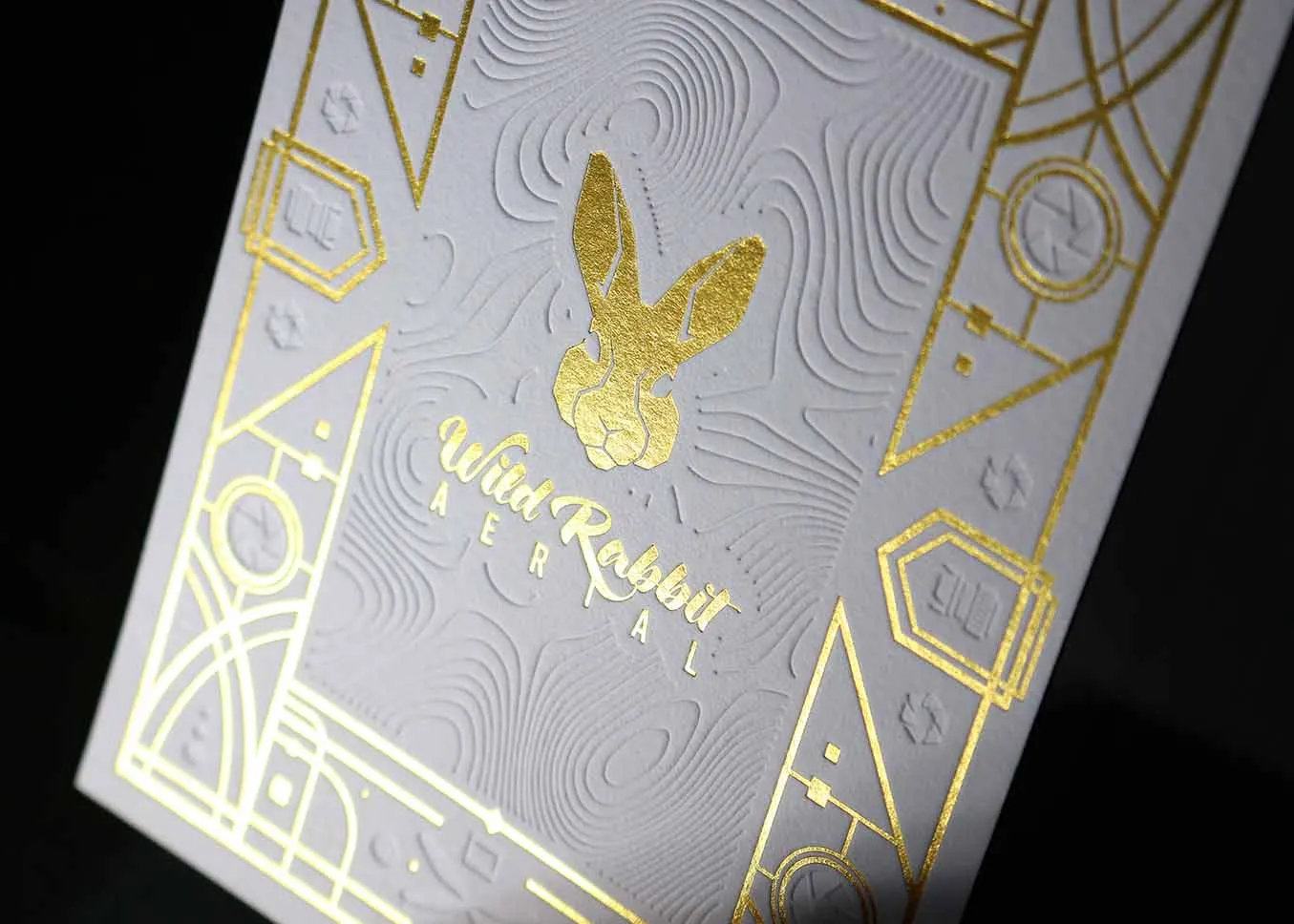
Blind debossing is a letterpress impression with no ink. A plate presses into the paper surface, creating a physical depression — visible in raking light, touchable by hand — with no color added.
"Blind" means without ink or foil. "Deboss" means the impression pushes down into the paper surface (as opposed to embossing, which pushes up). Blind debossing is run exactly like letterpress printing — same press, same plates — except no ink is applied. The plate simply presses the paper.
The result is a subtle tactile detail that shows at certain angles and rewards close attention. It says quality without announcing it. Clients who hold a blind-debossed business card almost always notice it — even if they can't name what they're feeling.
What is the difference between blind debossing and blind embossing?
Debossing pushes the design into the paper (impression goes down). Embossing pushes the design up from behind (impression rises above the surface). Both can be 'blind' — meaning without ink or foil.
Letterpress naturally creates debossing because the plate presses down from the front. Traditional raised embossing requires a matching male/female die set and is a separate process. When people say "blind emboss" and "blind deboss" in the stationery context, they often mean the same thing — a tactile impression without color. The terminology is used interchangeably in the industry. If you're looking for a pressed-in detail without ink, blind debossing on the letterpress is the right technique.
What does blind debossing look like?
In flat, even light it's nearly invisible. In raking or side light — or when touched — it's clearly present as a physical depression in the paper.
This variability is part of its appeal. A blind-debossed background pattern, for example, adds dimension to a card that looks simple and clean at first glance. Pick it up, angle it toward the light, and the texture reveals itself. Or run a finger across it and feel the impression. It's a detail for people who look closely — and those are exactly the people you want to impress.
The visibility also depends on paper: deep, soft impression on 600gsm cotton is more visible than a lighter impression on a thinner or harder stock.
When should you use blind debossing?
Use blind debossing when you want a tactile detail that adds texture without adding another color. It works best as a secondary element — backgrounds, borders, watermarks, monograms — rather than as the primary printed content.
Good applications:
- Background textures — a debossed dot grid, linen pattern, or geometric background that adds dimension without competing with the main printed text
- Borders and frames — a thin debossed line border around a business card or invitation
- Monograms or logos — a debossed monogram on the back of a business card or the inside of an envelope flap
- Combined with foil or ink — add a debossed detail to a foil-stamped piece for extra layered texture
- Envelope flaps — a subtle debossed motif on the envelope flap is a surprising detail that guests discover when they open the envelope
What are the limitations of blind debossing?
Blind debossing requires good contrast with the paper to be visible — smooth, soft papers on appropriate light colors work best. Very fine details may not hold cleanly at small sizes.
- Paper choice matters more than with inked printing — soft cotton papers show the impression most clearly. Hard or coated papers don't compress as much and show less depth.
- Fine detail — very fine lines and tiny text don't show as distinctly as bolder elements. Minimum recommended line weight for clean blind debossing: 1pt or heavier.
- Photography is not suitable — complex photographic images don't deboss well because the fine gradient detail disappears at press pressure. Use simple, clean vector designs.
- Not suitable as the only element on a piece — if the entire piece is blind-debossed text, readability is very limited except in raking light. Blind deboss works best as an accent, not as primary reading text.
A note on visibility
Blind debossing is one of the most photographed-poorly techniques in printing. In a straight-on photograph in even light, it may be invisible. In person, held at an angle, it's clearly present and beautiful. Don't judge blind deboss from product photos — the technique is designed to be felt and seen in person.
Frequently asked questions about blind debossing
-
How much does blind debossing cost compared to letterpress with ink?
Blind debossing costs slightly less than a letterpress color because no ink is involved, but still requires a plate and press pass. If you're already running a letterpress job and want to add a blind deboss, the incremental cost is the additional plate and run time — typically meaningful but not as much as adding a full ink color.
-
Can blind debossing be done on the same piece as foil stamping?
Yes — and it's a beautiful combination. For example: foil-stamped text or logo on the front; blind-debossed pattern or border as a background or secondary element. Each technique runs as a separate press pass. You need separate files/layers for the foil art and the deboss art.
-
What's the difference between blind debossing and a watermark?
A traditional paper watermark is created during paper manufacturing by varying the paper's density. A blind deboss is applied after the paper is made, by pressing a plate into the surface. They look similar in certain lighting conditions, but a blind deboss is an add-on printing process, not a paper property.
-
Is it called blind deboss or blind debossing?
Both terms are used. "Blind deboss" is the noun (the technique itself). "Blind debossing" is the gerund (the process of doing it). In the industry they're used interchangeably: "add a blind deboss to the back" or "we're blind debossing the envelope flap." Same thing.
Want blind debossing on your project?
Tell us what you're printing and what element you'd like debossed. We'll advise on whether it's the right technique for your design and paper choice.
Request a Quote About Letterpress