
What Finishing Options Can You Add to Letterpress Printing?
Finishing is where printed pieces go from good to exceptional. Edge painting, duplexing, die cutting, laser cutting, eyeletting, scoring, and hand assembly each add a layer of craft that elevates the final product.
What is edge painting?
Edge painting is the process of applying paint to the cut edges of a stack of cards or invitations, adding a visible stripe of color when viewed from the side.
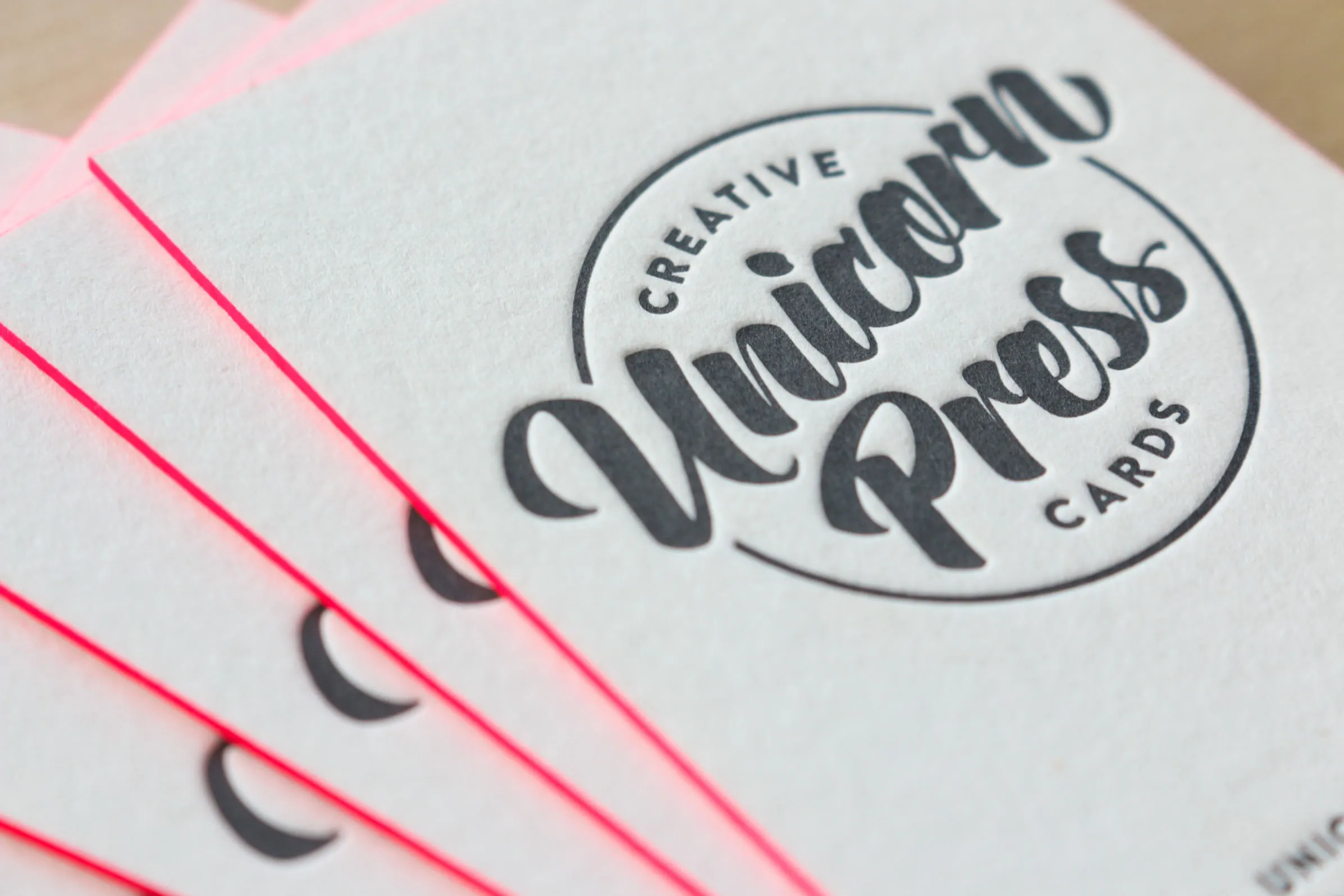
The paint can be coordinated with Pantone colors or applied in metallic finishes like gold or silver. Edge painting works best on thicker papers — the thicker the stock, the more visible and dramatic the color stripe. It's a popular finishing touch for business cards, wedding invitations, and note cards.
What is duplexing?
Duplexing is the process of gluing two sheets of paper together to create a single, thicker piece with two distinct surfaces.
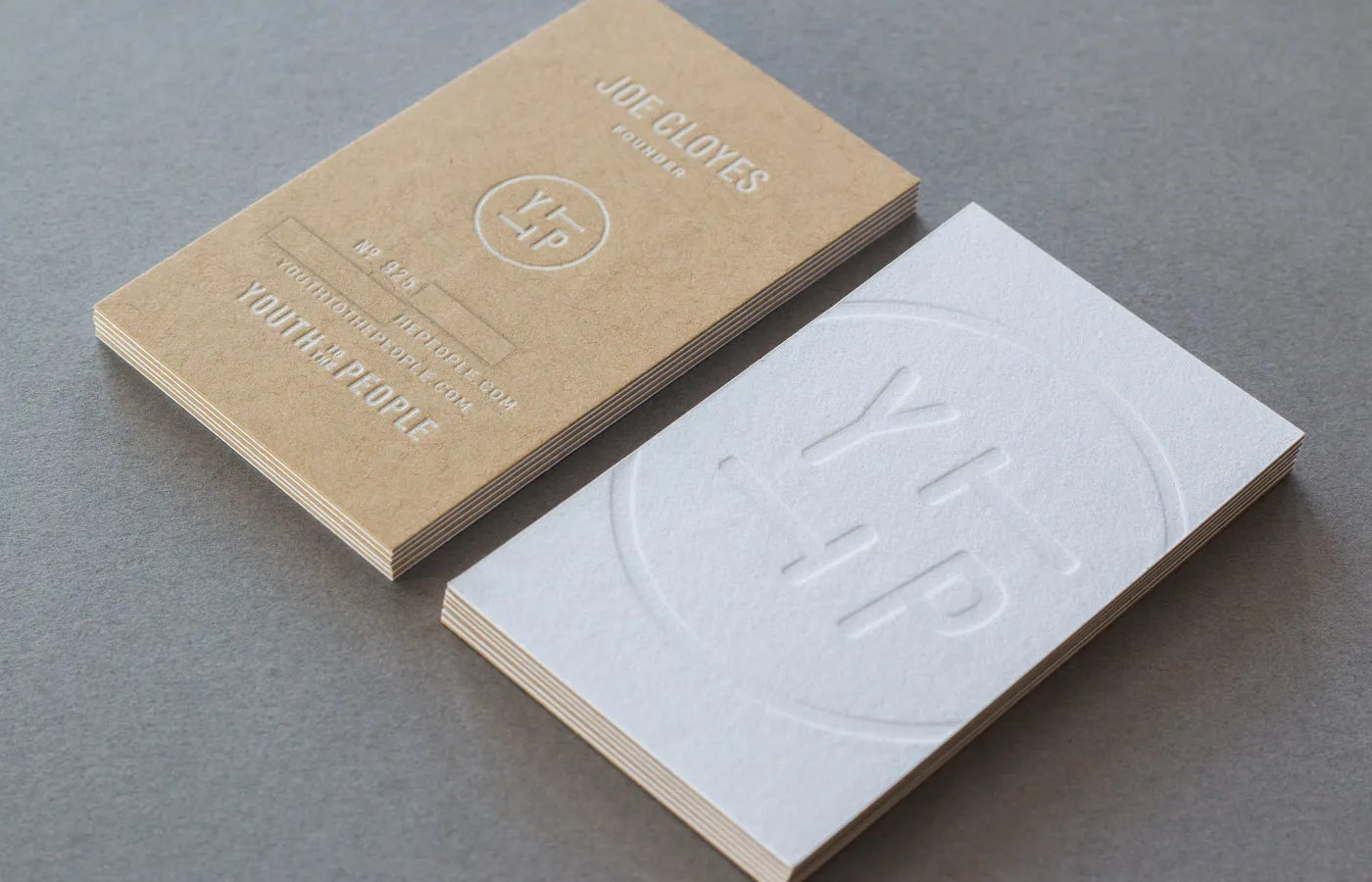
This technique lets you print deep letterpress impressions on both sides without show-through, and you can combine different paper colors or textures — white on front, black on back, for example. Triplexing takes this a step further by sandwiching a colored sheet between two outer sheets, creating a visible pop of color along all four edges.
How does die cutting work?
Die cutting uses a custom-shaped steel blade (the "die") to cut paper into shapes that a standard paper cutter can't achieve.
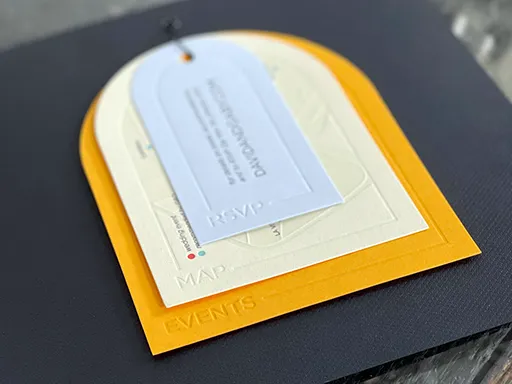
We can cut pieces into completely custom shapes, or use stock dies for common modifications like rounded corners or scalloped edges. Custom dies are a one-time cost — once made, they can be reused for future runs. Die cutting is popular for hang tags, unique business card shapes, labels, and packaging components.
What can you laser cut?
Our 100-watt laser cuts and engraves paper, acrylic, wood, and can mark anodized aluminum — ideal for one-off prototypes or intricate cut-paper designs.
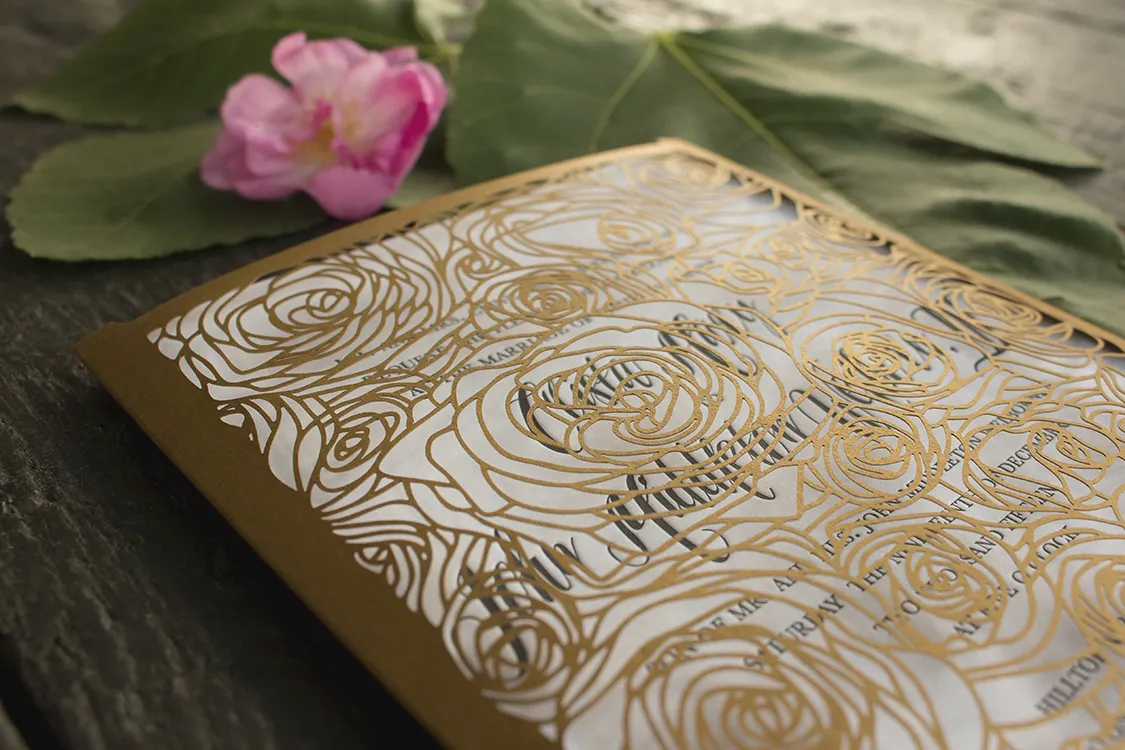
Laser cutting is best suited for highly detailed designs where traditional steel dies would be impractical, or for small quantities where the cost of a custom die isn't justified. Common uses include invitation sleeves, decorative overlays, and packaging prototypes.
What is eyeletting?
Eyeletting is the process of inserting a small metal ring (eyelet) through a punched hole in paper, reinforcing the hole and adding a finished look.
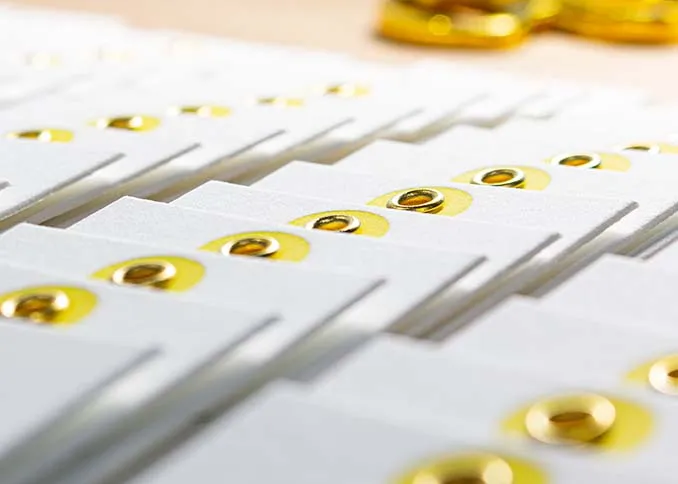
Eyelets are commonly used on hang tags where string or ribbon passes through, and on wedding suites to hold multiple pieces together. We offer eyelets in various colors and sizes — brass, silver, matte black, and more.
What is scoring and why does it matter?
Scoring creates a precise crease line in paper so it folds cleanly and uniformly, without cracking or buckling.
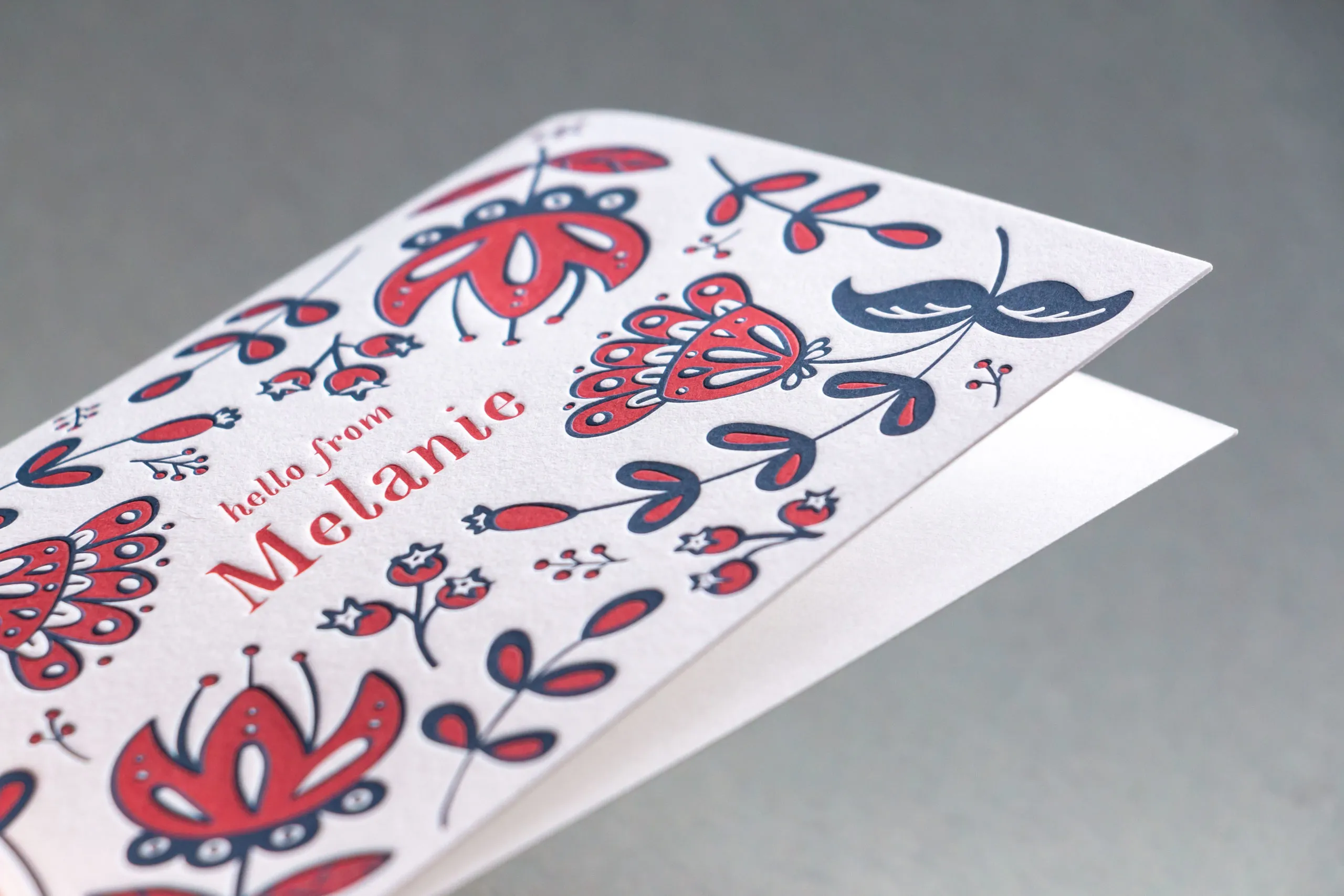
We use metallic scoring plates to press a channel into the paper. This is essential for folded cards, gate-folds, z-folds, and belly bands — any piece that needs a clean, consistent fold. Without scoring, thicker papers will crack along the fold line, especially if they have heavy ink coverage.
Do you offer hand assembly?
Yes. We handle envelope lining, invitation suite assembly, ribbon and string tying, rivet and grommet punching, and pocket assembly.
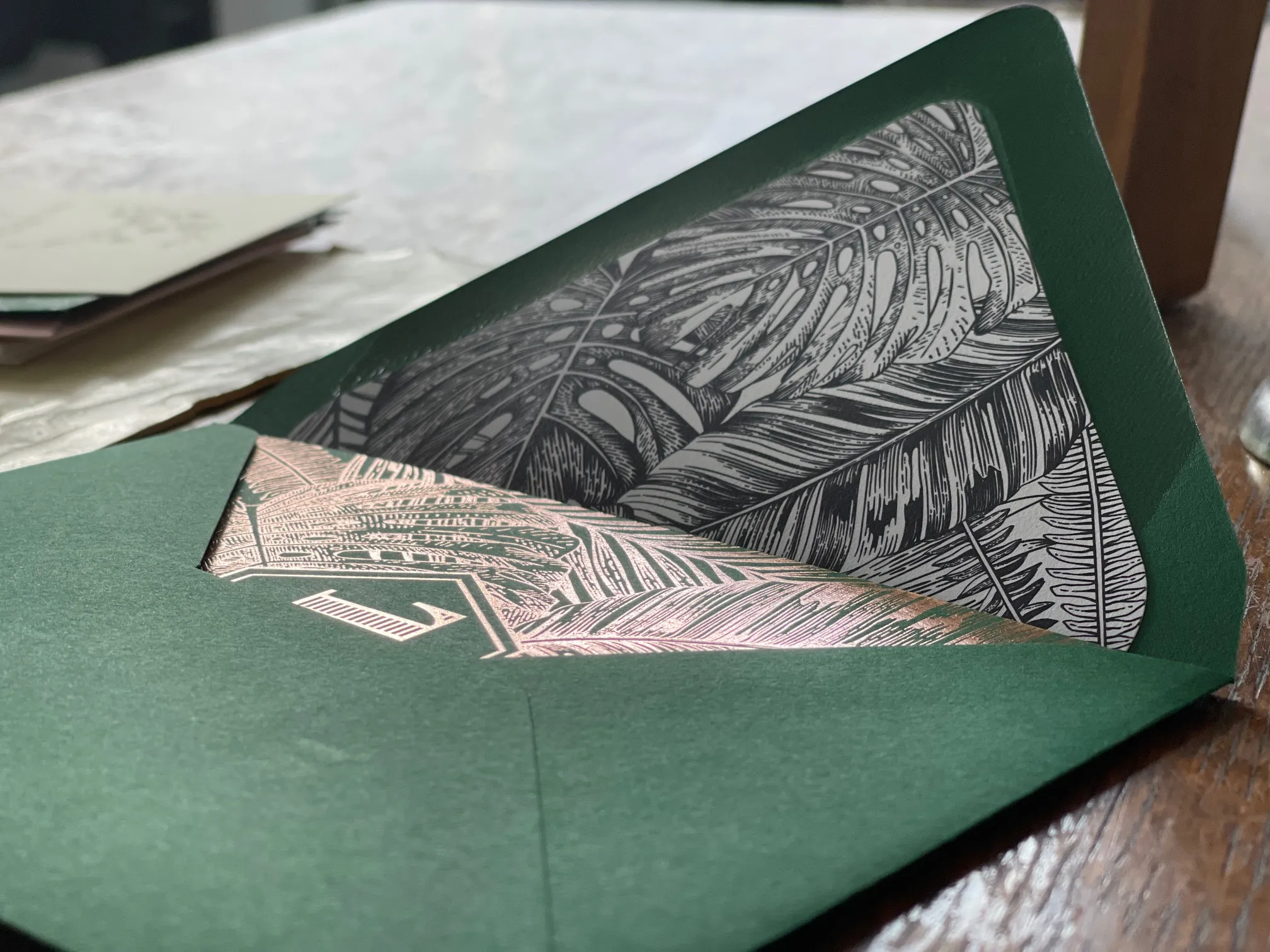
Hand assembly is where all the individual printed pieces come together into a finished product. For wedding suites, this often means lining envelopes, stacking and assembling invitation components, and tying ribbon or string. We assemble everything in-house so the finished product arrives ready to address and mail.
Ready to add the finishing touch?
Tell us about your project and we'll recommend the right combination of printing and finishing techniques.
Request a Quote