
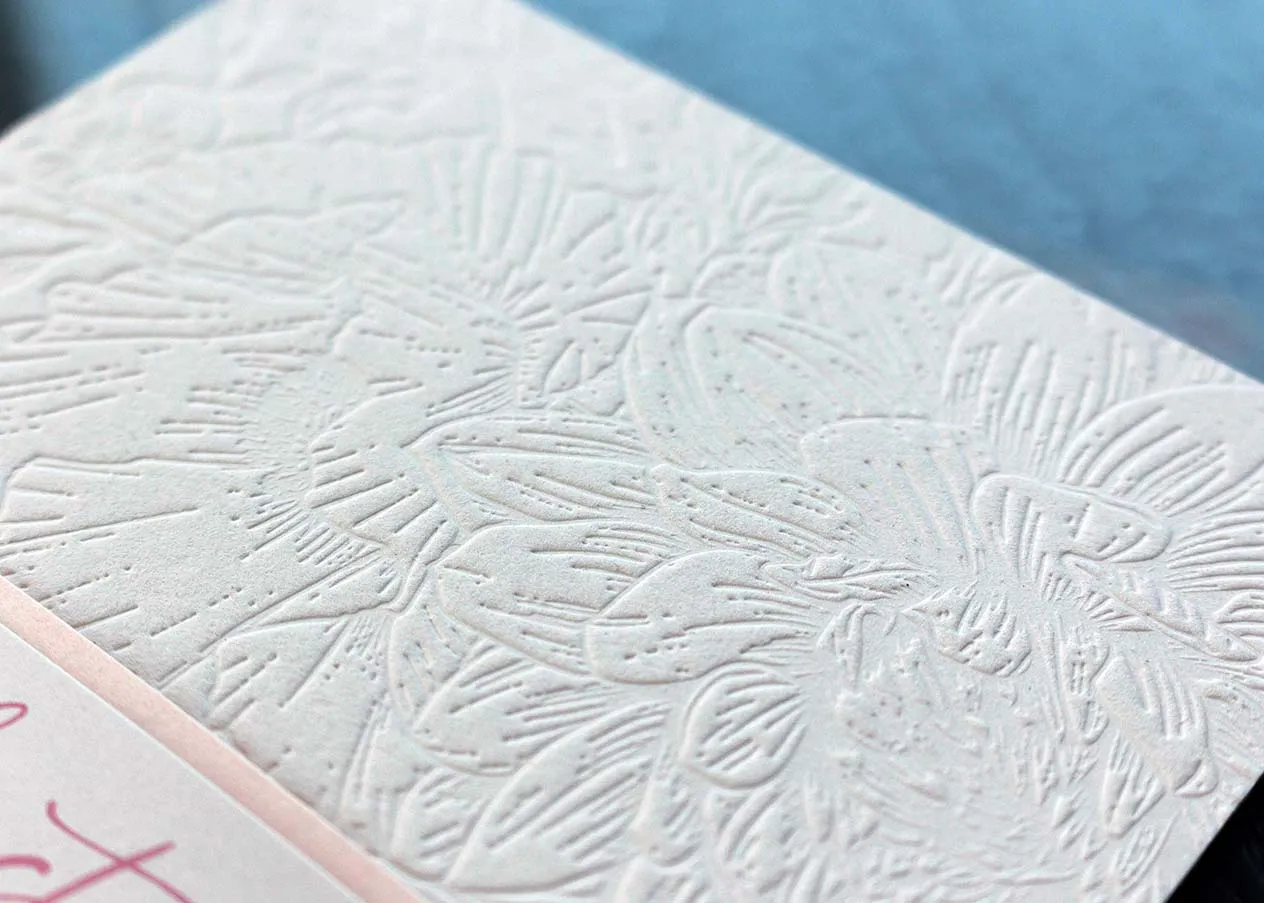
To ink or not to ink? That, sometimes, is the question. Today, we're going to get into the nitty gritty of blind debossing — a printing technique that has become increasingly popular in both business and event stationery.
To put it in the simplest terms, a blind deboss is printing using a letterpress plate without ink, leaving an inkless impression in the paper. Other than the inking of the press, every other step in the blind deboss process is the same as a standard letterpress pass. A plate is made from a design, and from that plate, the design is pressed into the paper, leaving behind a subtle but tangible impression.
What designs work well with blind debossing?
Most often, a blind impression is used to add texture or design elements to a print. Lace borders, floral patterns, and graphic art deco lines work well with this technique because these elements don't necessarily need ink or foil to make them shine. This is a fantastic way to add subtle texture and imagery to an invitation without taking away from the importance of the text.
Textured papers combined with a deep inkless impression on a wedding invitation is a beautiful touch to add to your event stationery.
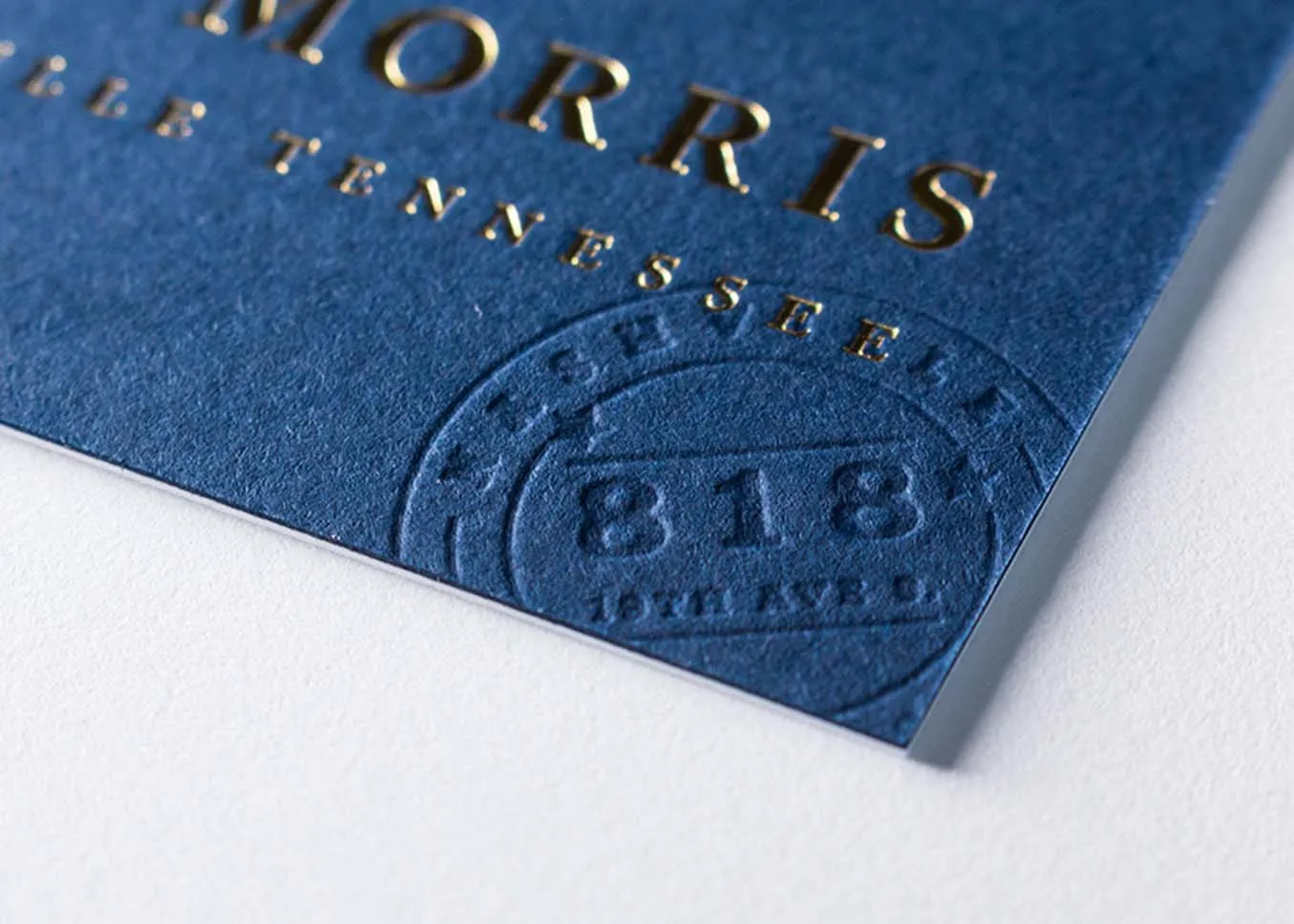
How does blind debossing work on business cards?
A blind deboss can add visual interest to the standard business card — making it something clients will notice and remember. Some logos and designs work beautifully with a blind deboss, especially those that are simpler in form. More complex or detailed designs may lose some detail or readability without the use of ink or foil.
We can also use a clear varnish in place of ink, which allows for more legibility while still employing a clean and modern printing technique.
In the card above, a deep blind impression was pressed into textured blue paper, then combined with gold foil stamping. The result is a card that definitely stands out in a sea of boring business cards.
Using blind debossing as a main design feature
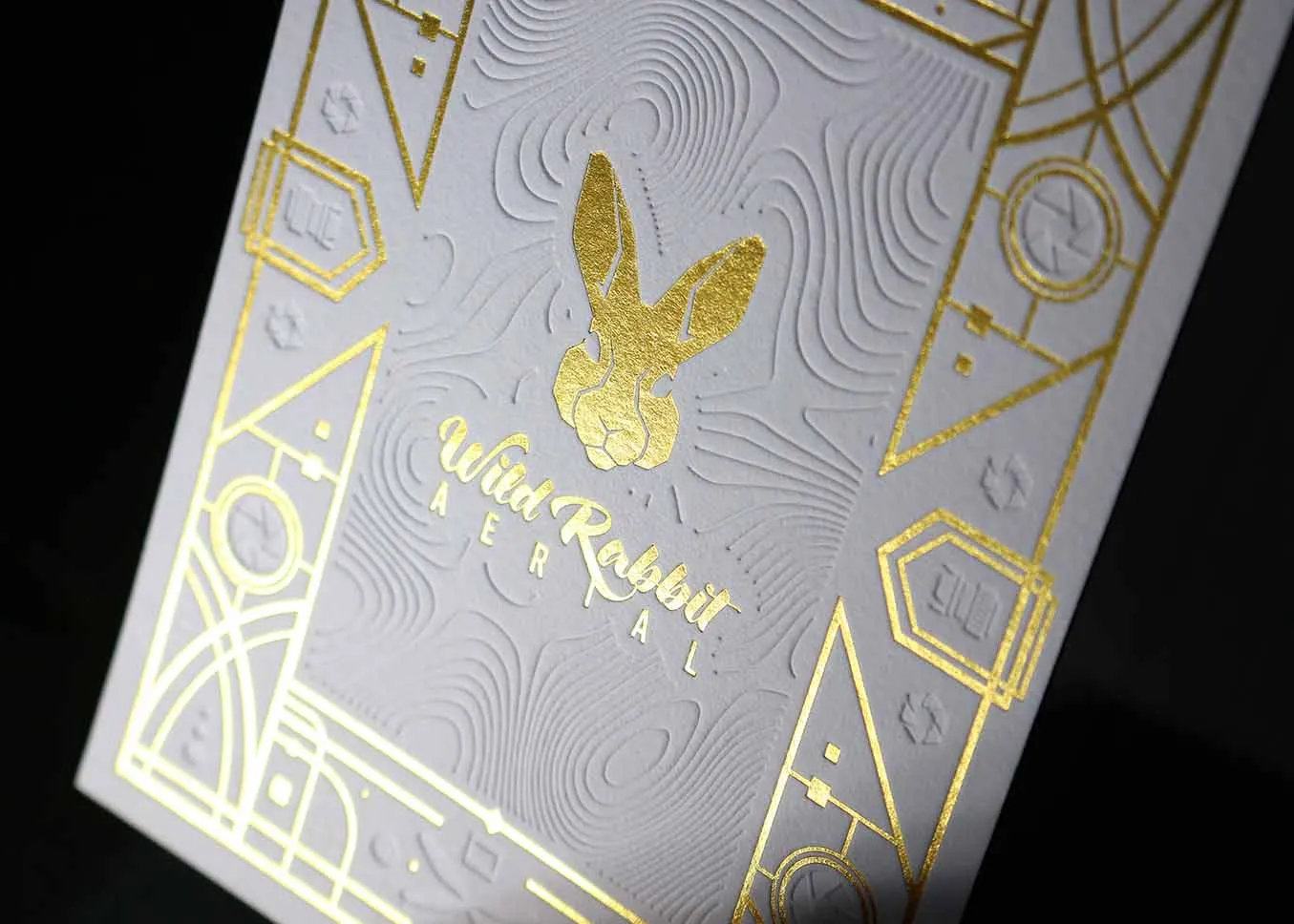
While an inkless impression is more commonly used as a complement to a design, it's becoming more popular to use this technique as the main feature. A graphic design pressed into paper alongside letterpress or foil stamping makes a bold statement.
Not only does the artwork look bold and interesting without any ink, but it adds texture and interest to the foil stamping portion of the design — creating a layered piece where some elements are immediately visible and others reveal themselves through touch.
Key things to know about blind debossing
- Works like letterpress printing, but without ink
- Most visible in raking or side light; nearly invisible in flat light
- Best on soft cotton papers (Crane's Lettra, handmade papers)
- Works beautifully combined with foil stamping or letterpress ink
- Requires clean vector artwork — not suitable for photographic images
- Bold, simple designs show more clearly than fine detail
Choosing a blind deboss for your design is a stunning way to add something extra to your stationery. Whether you're using this technique to add subtle texture or utilizing a bold impression to showcase your branding, we're always eager to help throughout the process.
Want blind debossing on your project? Learn more about the technique or Request a quote →