
The envelope is your guest's first glimpse of the wedding invitation. It's important to consider the style and function of the envelope during the planning and design stage. You're creating a first impression with the envelope — so why not make it as special as the invitation components inside?
What envelope flap styles are available?
Choosing the right flap style for your invitation is an important step. While there are no rules when it comes to selecting the flap that suits your design best, each style sends a different message.
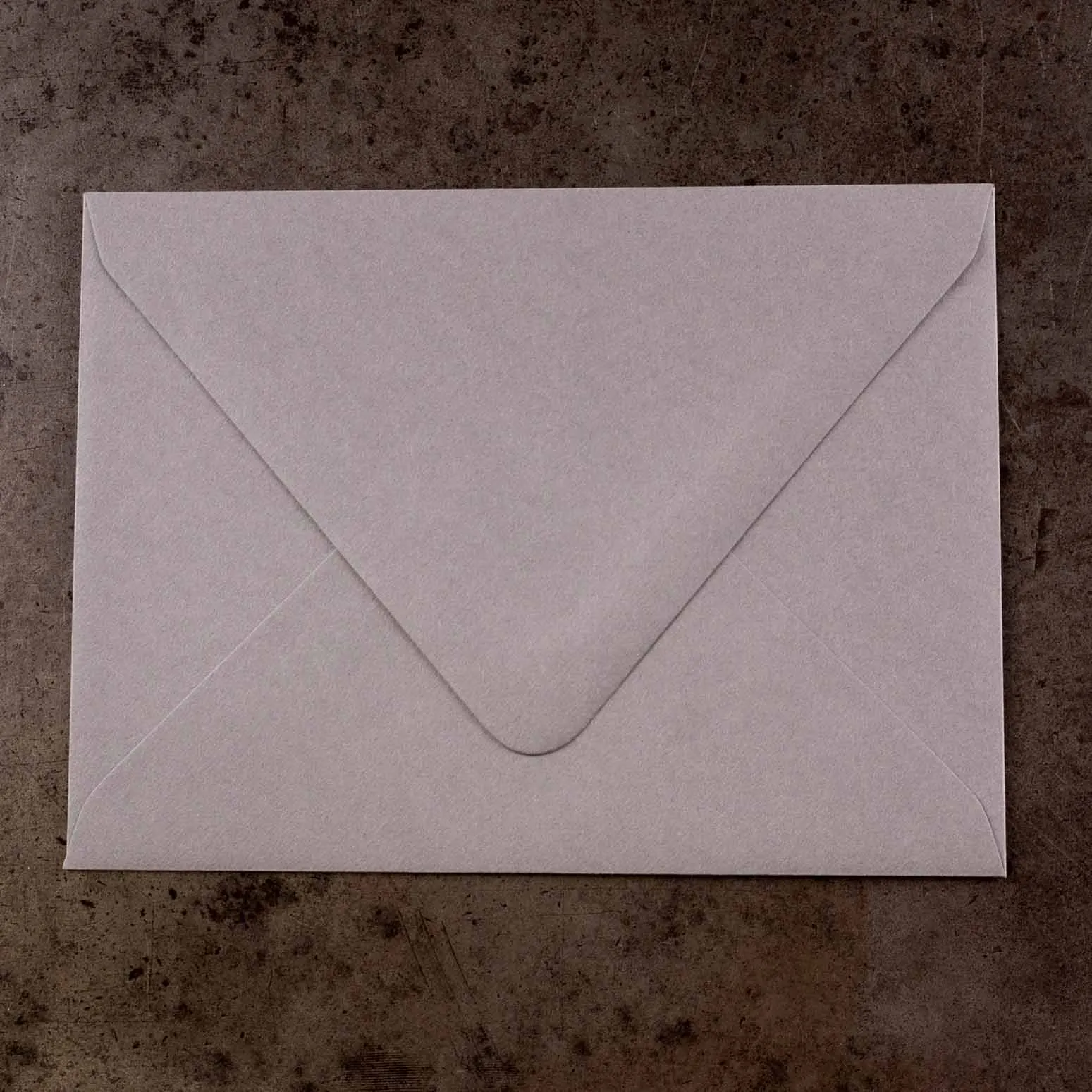
- Square flap — more casual and relaxed in tone
- Pointed flap — sends a more formal message; a classic choice
- Euro flap — the long, diagonal pointed flap that bridges formal and modern; bridges the gap between the other two styles, landing in "impressive" territory
What is the difference between an outer and inner envelope?
The outer envelope is for mailing. The inner envelope protects the invitation itself and traditionally carries the guest names in a slightly less formal way.
The outer (mailing) envelope
The outer envelope features addressing for each guest on the front panel and the return address on the back flap. Your guests' names should be written out fully, including titles, avoiding nicknames or abbreviations. While envelope liners are often used with outer envelopes, remember this is the envelope that guests will tear open — an envelope liner on the inner envelope is more traditional.
The inner envelope
The inner envelope's purpose is to protect the invitation. Inner envelopes originated when mail was delivered via horseback — the inner envelope ensured the invitation arrived pristine despite the dusty journey. Nowadays, an inner envelope is a nice touch when you're wanting to make a grander statement. The inner envelope is often addressed with guests' names in a slightly less formal way. This is also where you let guests know if they can bring someone, by adding "and Guest" to each name.
The response envelope
The response envelope is for the reply card that guests mail back. This envelope is typically pre-addressed and pre-stamped so all guests need to do is drop it in the mailbox. Use the return address of the event host on the front.
How should the return address be printed on wedding envelopes?
Typically positioned on the back flap of the outer envelope, the return address can be printed by letterpress, foil stamping, or digital ink printing — the right choice depends on the style of your suite.
A letterpress-printed return address on the flap coordinates elegantly with a letterpress invitation suite. Foil stamping the return address adds a metallic accent. Digital printing offers the most color flexibility. All three are appropriate and beautiful options.
What options are available for addressing the envelopes?
While handwritten calligraphy is traditional, most modern couples use digital (or flat) printed addressing. Digital calligraphy can be just as beautiful as hand lettering — and white ink on dark envelopes opens up color combinations that calligraphy can't match.
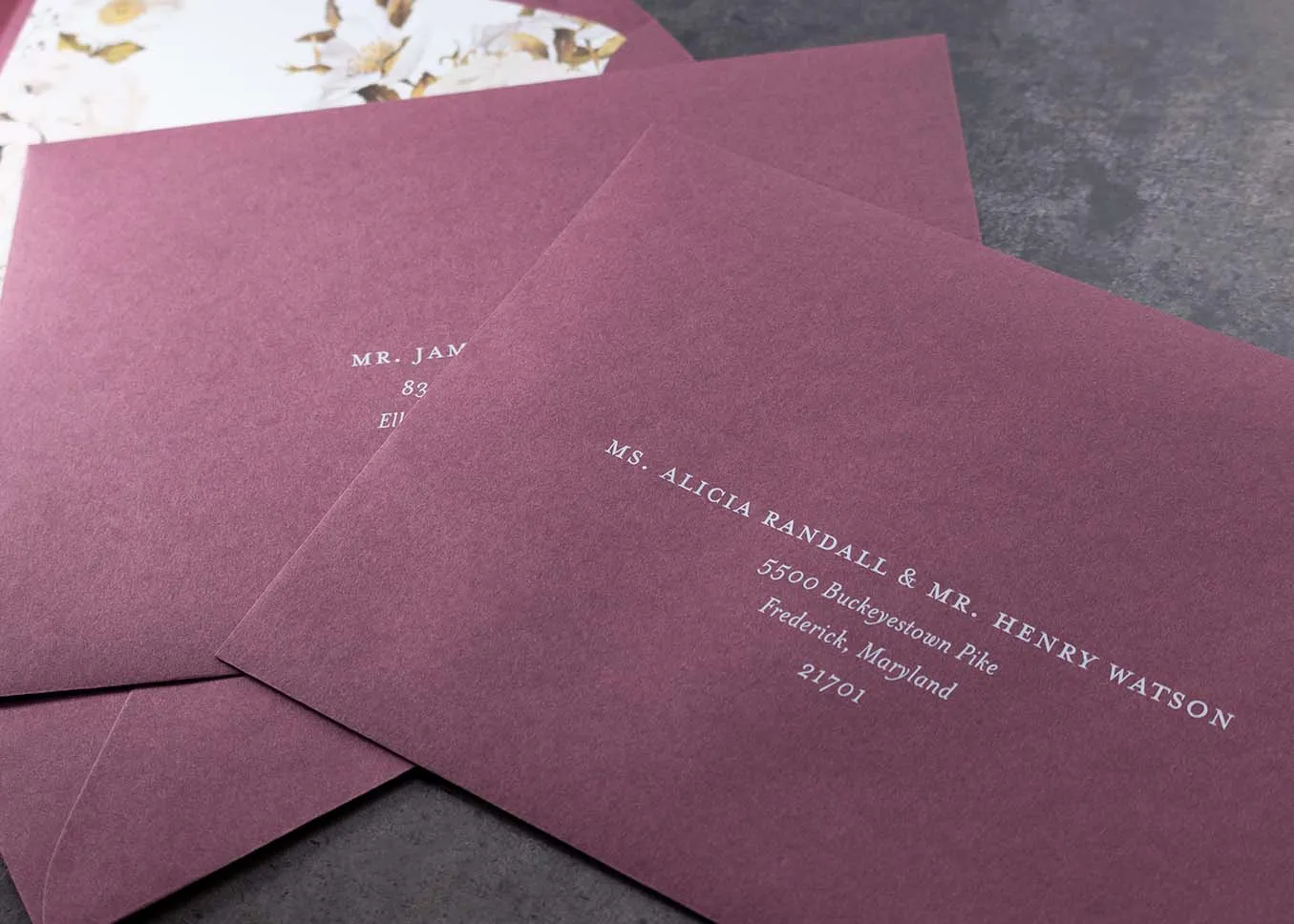
Each address is neatly and accurately printed on the front panel, with each guest's name and title exactly as you specify. You provide a spreadsheet of addresses; we print them all. It's also a good opportunity to double-check every address in your list before they go on envelopes.
What are envelope liners and how are they made?
Envelope liners are printed and die-cut inserts that line the inside of the envelope — visible when the flap is opened. They add color, pattern, or artwork as a surprise reveal when guests open the envelope.
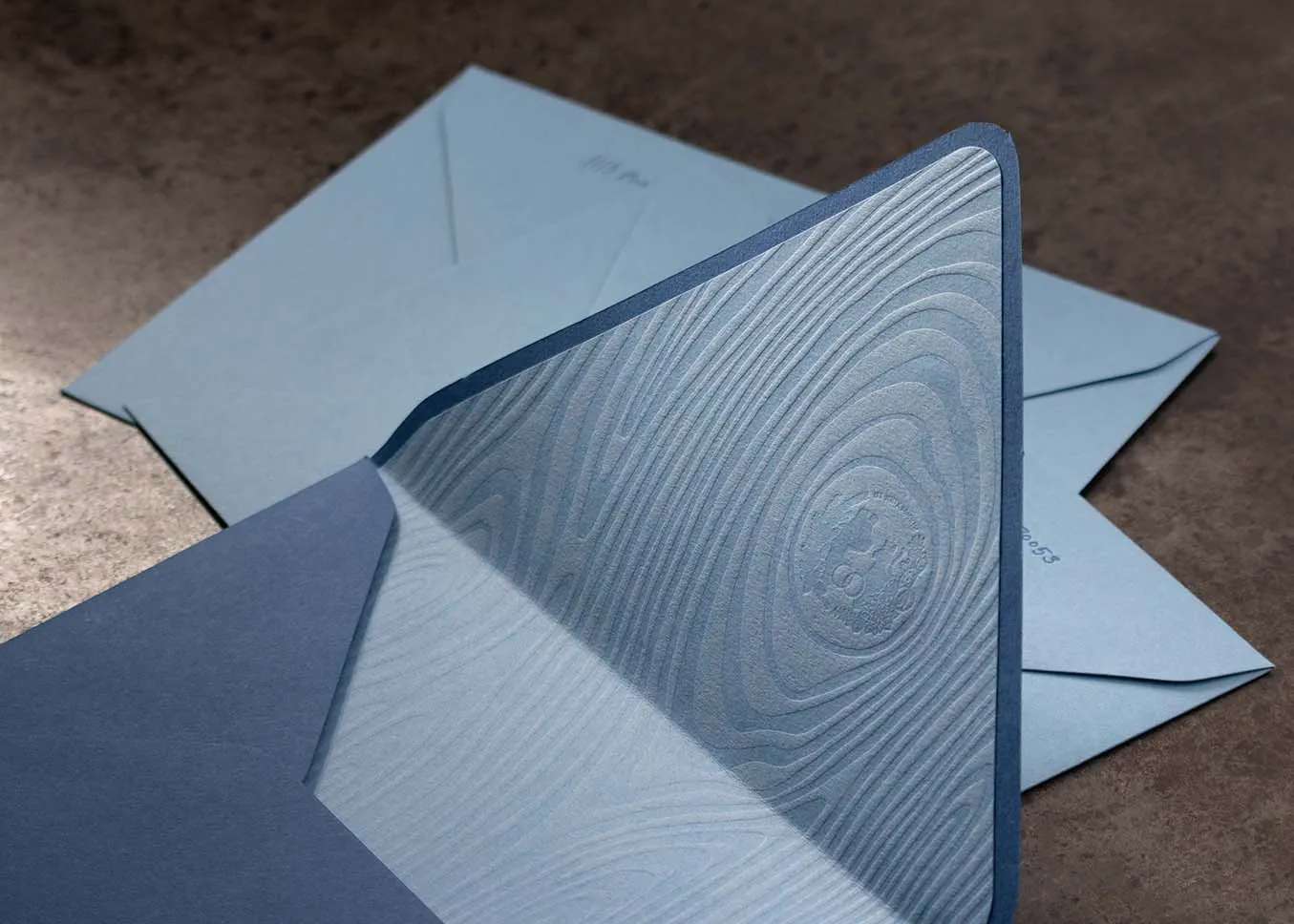
Using premium text weight papers, we can print designs like monograms or patterns with letterpress, foil stamping, or digital printing. The liners are die-cut to fit perfectly and line up with the flap of the envelope. Traditionally used on inner envelopes, liners are now commonly used on outer mailing envelopes as well — particularly in modern suites that skip the inner envelope.
What other ways can you seal and finish wedding envelopes?
Wax seals
Sealing your envelope with a wax seal adds elegance and allows the design of the invitation suite to carry through to the envelope closure. A monogram or design motif can be incorporated into the seal. Traditional wax seals use melted sealing wax and a metal stamp; modern self-adhesive wax seals are available as a simpler alternative. Note: wax seals often add weight and may require extra postage.
Custom sticker seals
Stickers made with uncoated papers and self-adhesive backing can be personalized with letterpress or foil stamping. A good option for adding a wedding monogram from the invitation to the envelope without the weight or cost concern of wax seals.
How much does mailing a wedding invitation suite cost in postage?
Expect more than a standard first-class stamp. Uniquely sized envelopes, square envelopes, thick multi-component suites, and wax seals all increase postage.
The best approach: take a fully assembled invitation suite — invitation, all enclosure cards, both envelopes, all finishing elements, and the outer envelope — to your local post office and have it weighed before ordering your postage. The per-piece cost can vary significantly depending on size, weight, and any non-machinable surcharges (square envelopes and envelopes with thick contents often incur these).
When should wedding invitations be mailed?
Mail wedding invitations six to eight weeks before the wedding date. This gives guests ample time to plan, arrange travel, and reply. For destination weddings or weddings that require significant travel, eight to twelve weeks is better.
If you're unable to mail with that lead time, consider including a wedding website or email address that guests can use to RSVP digitally. Guests from older generations will often expect and appreciate a physical response card, so it's a good idea to include both options when in doubt.
The envelope is not an afterthought
Wedding invitations are often a labor of love, with hours spent on the conception, design, and execution of the final suite. The envelope can sometimes be an afterthought — but as we've shown here, it's just as important as the stationery it holds. The style and design should be considered as carefully as the invitation itself.
Questions about envelopes or addressing for your wedding suite? Contact us — we've worked through every combination. Or Request a quote →